國際生留臺就業輔導計畫
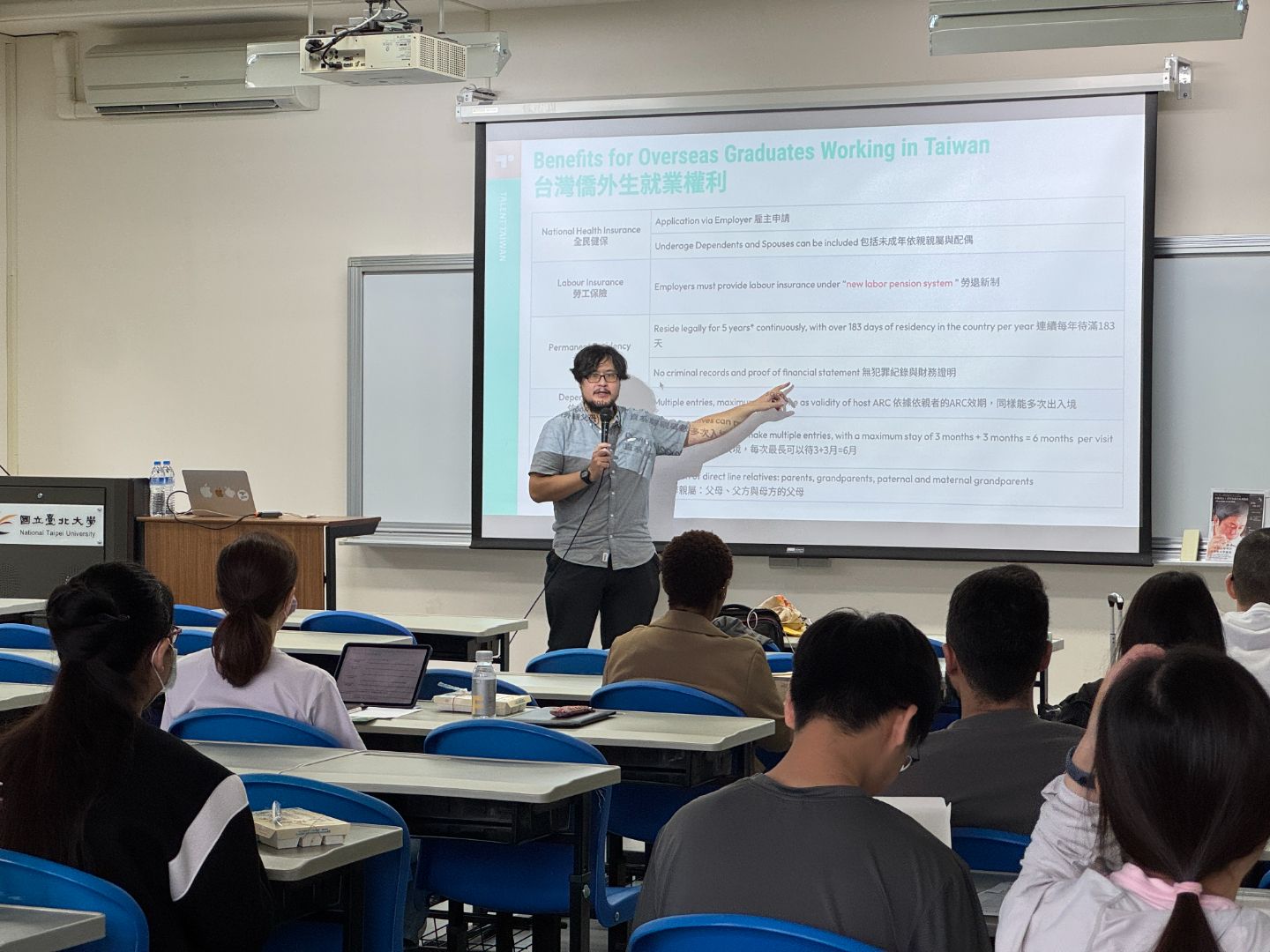
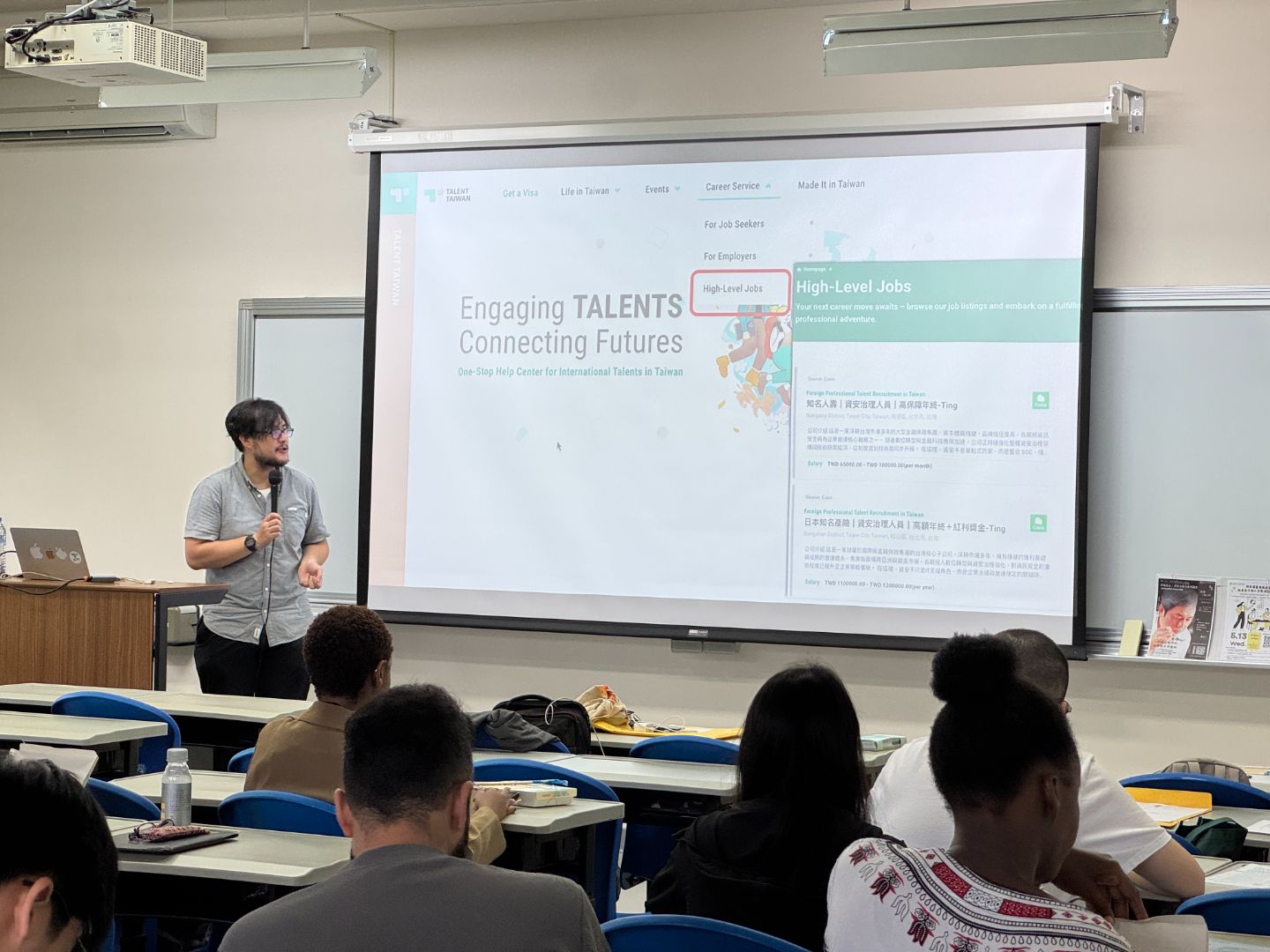
To help international students better understand the policies and pathways for staying and working in Taiwan after graduation, the Office of International Affairs held the session “Exploring Pathways to Stay and Work in Taiwan: Introduction to the Employment Gold Card and the Act for the Recruitment and Employment of Foreign Professionals” at noon on May 13, 2026, featuring speakers from the International Talent Taiwan Office. The session focused on the Employment Gold Card program, the Act for the Recruitment and Employment of Foreign Professionals, as well as related regulations and resources for international students seeking career opportunities in Taiwan after graduation, helping students gain a clearer direction for their future career development.
During the session, the speakers first introduced Taiwan’s recent international talent policies and recruitment initiatives, explaining how the government has worked to create a more welcoming environment for foreign professionals through the Act for the Recruitment and Employment of Foreign Professionals. The session also provided a detailed explanation of the Employment Gold Card, including eligibility requirements, application procedures, benefits, and target applicants. The speakers noted that the Gold Card integrates functions such as a work permit, resident visa, Alien Resident Certificate (ARC), and re-entry permit, offering foreign professionals greater flexibility in both employment and residency arrangements.
In addition, the session outlined various pathways for international students to seek employment and remain in Taiwan after graduation. Topics included the point-based evaluation system for overseas Chinese and foreign graduates, job-seeking residency options, work permits, and residency regulations. Students were encouraged to begin career planning early, understand different employment options and application requirements, and make good use of government-provided career and talent-matching resources to increase their opportunities for long-term development in Taiwan.
The speakers also shared current trends in Taiwan’s demand for international talent and provided practical examples of foreign professionals working in Taiwan. Students were encouraged to leverage their language abilities and cross-cultural strengths to enhance their future career competitiveness. During the Q&A session, participants actively raised questions regarding work permits, ARC applications, visa transitions after graduation, and regulations related to job-seeking periods, creating lively interaction and discussion throughout the event.
Many students commented that the most valuable aspect of the event was gaining a better understanding of Taiwan’s employment system, the Employment Gold Card application process, and the various pathways available for international students wishing to remain in Taiwan. Some students shared that the session “provided important information about employment opportunities and the Gold Card system in Taiwan,” while others noted that it helped them better understand “the different career pathways and future possibilities for international students in Taiwan.” Several participants also mentioned that the event inspired them to rethink their post-graduation plans and gave them a clearer direction for their future development in Taiwan.
Students further shared that the event helped them better understand the services and resources provided by the International Talent Taiwan Office, and many described the content as “clear and highly informative,” offering practical assistance for future applications and job preparation. Some participants suggested that similar events continue to be organized in the future, with even more interactive discussions and case-sharing opportunities to help international students gain deeper insight into working and living in Taiwan.
The Office of International Affairs stated that, as Taiwan continues to promote international talent recruitment policies, it will continue organizing diverse career development and stay-in-Taiwan related activities to help international students stay informed about the latest policies, strengthen career planning abilities, and enhance their competitiveness for internships and employment opportunities in Taiwan, while also fostering stronger connections between international talent and Taiwanese industries.